Anyone can put a comic book in a frame. Framing a comic book without damaging it takes a little more care, and the right materials.
Comic books are made from paper, ink and staples, and many older issues were printed on paper that was never meant to last for generations. Light, acidic materials, moisture and repeated handling all take a toll.
That doesn’t mean your favorite issue has to live in a box.
With the right materials and a little planning, you can display a comic while protecting the cover, the pages and the condition that made you want to save it in the first place.
Short on time? To frame a comic book without damaging it, use UV-protective glass or acrylic and acid-free mats and backing, keep the comic from touching the front of the frame, and hang it away from direct sunlight, heat and humidity.
What Can Damage a Framed Comic Book?
Most framing problems come back to four things.
Light
Sunlight fades inks and discolors paper over time. UV-protective glass or acrylic on the front of the frame helps reduce exposure, but it doesn’t make direct sunlight harmless.
A wall that gets strong afternoon sun is not the place for an original comic, even behind UV protection.
Acidic Materials
Standard cardboard, inexpensive backing boards and some mat boards contain acids that discolor paper as they age.
Anything sitting against or right around a collectible comic should be chosen with preservation in mind.
Contact With the Glass or Acrylic
The cover of the comic shouldn’t rest directly against glass or acrylic.
Changes in temperature and humidity can cause problems when paper is pressed against the front of a frame for long periods. Proper matting holds the comic behind the frame opening while keeping the cover off the front.
Too Much Handling
Every time you take a comic out of its bag, reposition it or put it back into a frame, there’s another chance to bend a corner, create a spine tick or leave a fingerprint.
The goal is simple: frame it carefully once, then leave it alone.
How to Frame a Comic Book Safely, Step by Step
1. Start With a Clean, Protected Comic
If you normally store the comic in a protective bag (poly or Mylar) with a backing board, there’s usually no reason to handle the bare comic more than necessary.
Check the bag and board before framing. If either has turned cloudy, yellowed, warped or worn, replace it with fresh comic-storage supplies before you begin.
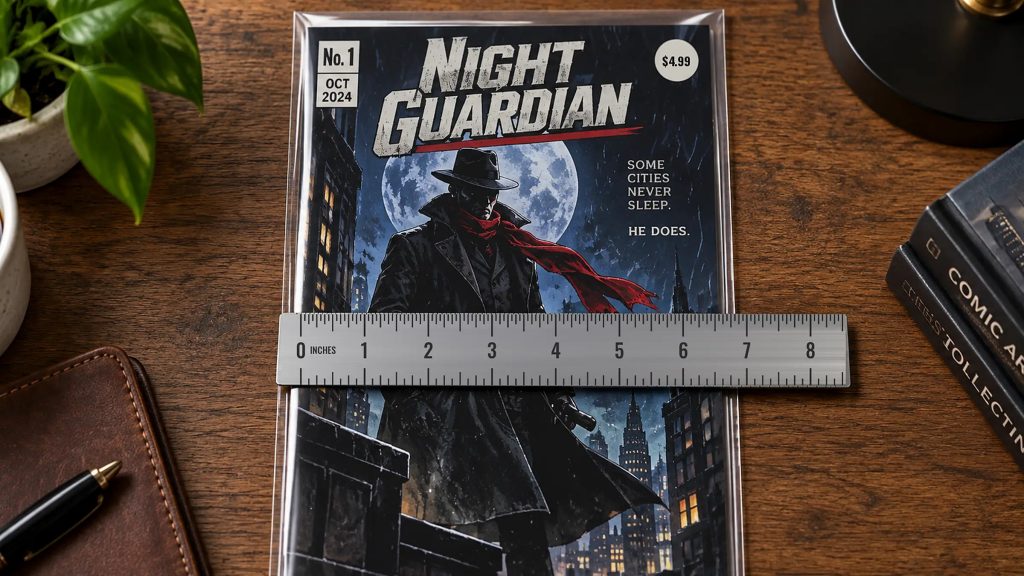
Also make sure you know what size comic you have. Comic dimensions changed over the decades, so a Golden Age or Silver Age issue may not fit a frame built around today’s standard size. If you’re unsure, start with our comic book sizes by era guide before choosing a frame.
2. Choose Preservation-Friendly Framing Materials
When you’re framing a comic you care about, don’t choose a frame on looks alone.
Look for:
- UV-protective glass or acrylic to reduce light exposure
- Acid-free matting around the comic
- Acid-free backing behind it
- A design that keeps the comic from resting against the front of the frame
- A design that lets the comic come back out later without damage
That last point matters. You may eventually rotate your display, sell the comic or have it professionally graded. Your frame shouldn’t turn a collectible into a permanent installation.
Our comic book frames pair UV-protective acrylic with acid-free mats and backing, so you don’t have to piece together preservation materials yourself. For one favorite issue, the Single Comic Book Frame in Gotham is a simple place to start.
3. Keep the Comic Off the Glass or Acrylic
This is one of the most important details in the whole process. The comic shouldn’t be pressed directly against the acrylic.
In our frames, the mat overlaps the edges of the comic and holds it securely in position behind the opening. That gives the cover a clean, finished look without forcing or compressing the comic inside the frame.
Before closing the frame, make sure the comic is sitting flat, centered behind the mat and held evenly around the opening.

4. Center the Comic Carefully
Work on a clean, dry surface, with a soft towel under the frame to protect both the frame and your work surface.
Position the comic so the visible border around it is even and the cover isn’t pinched or forced into the opening.
Before closing everything up, check for dust, lint or hair between the acrylic and the mat. It’s much easier to remove now than after the frame is on the wall.

5. Choose the Right Wall
Even a well-framed comic needs a good spot.
Avoid:
- Direct sunlight
- Spots right beside a window
- Radiators and other heat sources
- Bathrooms and other humid rooms
- Places where the frame is likely to get bumped or knocked down
An interior wall with a steady temperature and limited sunlight is a much better choice.
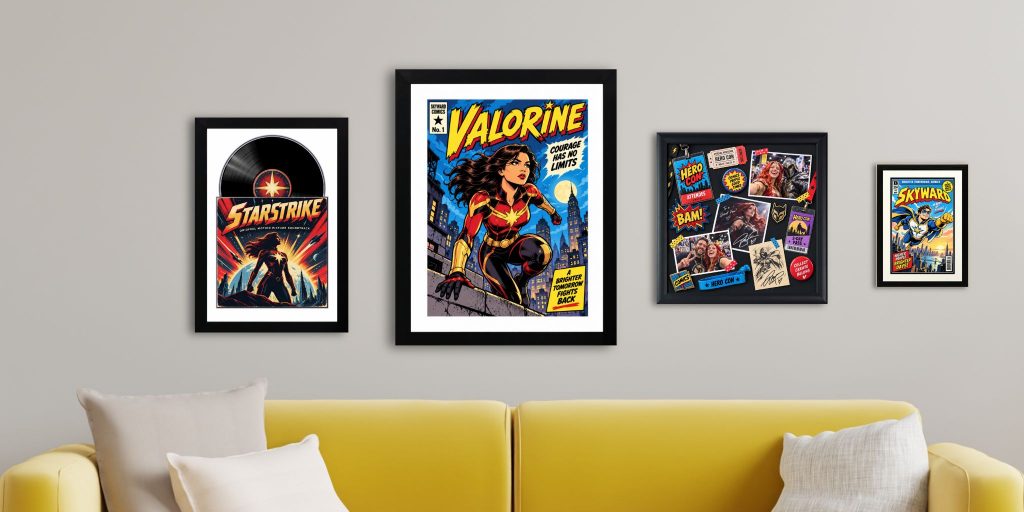
Hanging several issues together? Plan the layout before you put holes in the wall. Our guide to displaying comic books covers layouts for single issues, rows and full collections.
6. Check It Once or Twice a Year
You don’t need an elaborate maintenance routine. Once or twice a year, take a closer look at the display and check for:
- Changes in the color of the paper
- Moisture inside the frame
- Movement inside the frame
- Contact between the comic and the acrylic
- Loose hanging hardware
If everything looks the way it did when you framed it, leave it alone.
Should You Frame a Comic With or Without the Bag?
For a collectible comic, less handling is generally safer.
If your frame is designed to hold a properly bagged and boarded comic, leaving that protection in place cuts down on fingerprints, handling and movement.
The most important thing is that the comic fits comfortably. Never force a bagged comic into an opening that’s too tight or compress the spine to make it fit.
If you’re working with an older or unusually sized issue, check its dimensions before ordering a frame.
Should You Frame a Graded Comic?
Yes, though the framing needs are different.
A graded comic is already sealed inside its grading holder, and it should stay there. CGC says that once a graded comic is removed from its holder, the certified grade is void.
CGC also describes its holder as archival-safe and recommends keeping certified comics in a cool, dry, temperature-controlled spot with minimal exposure to light.
So a graded comic needs a display built around the size and depth of the intact holder.
If you have a graded comic you’d like to display, call our framing team at 800-477-9005, and we’ll tell you what we can make.

Does Framing a Comic Book Affect Its Value?
The frame itself doesn’t decide what a comic is worth. Condition does.
That’s why the goal of good framing is to avoid introducing new damage while the comic is on display. Use preservation-friendly materials, keep handling to a minimum, avoid direct sunlight and make sure the comic can come out of the frame unchanged.
Think of the frame as a way to enjoy the comic while still treating it like the collectible it is.
Quick Answers About Framing Comic Books
Can you frame a comic book without damaging it?
Yes. Use preservation-friendly materials, keep the comic off the glass or acrylic, keep handling to a minimum and hang it away from direct sunlight, heat and humidity.
Should a comic book touch the glass in a frame?
No. The comic should sit behind a mat, never pressed against the glass or acrylic. Proper matting holds the comic in position behind the opening while keeping the cover off the front of the frame.
Do comic books need UV protection when framed?
UV-protective glass or acrylic is a smart choice for collectible paper. It cuts exposure to damaging ultraviolet light, but the frame should still hang out of direct sunlight.
Should I leave my comic bagged and boarded in the frame?
If the frame is designed to hold the comic comfortably with its bag and board, leaving that protection in place cuts down on handling of the bare comic. Never force an oversized comic or bag into a frame that’s too tight.
Frame the Comic You Actually Want to See
Some comics are meant to stay tucked safely inside a collection. Others deserve a spot on the wall.
Maybe it’s the cover you spent years hunting for, the issue that got you into collecting, or simply the artwork you never get tired of looking at.
The right frame lets you enjoy it without treating preservation as an afterthought.
Framing one as a gift? Our list of gift ideas for comic book collectors has picks they’ll actually keep.
At customframes.com, our framers build each comic frame with UV-protective acrylic and acid-free mats and backing, so collectible covers get a clean, finished look.
Have an older, oversized or graded comic? Call our framing team at 800-477-9005 with the measurements, and we’ll tell you what we can make.

 By Brynn Van Beek